
Marrakech gluten free: tested restaurants, bakeries, market tips and a printable card in French and Arabic for coeliac travellers.
Travelling Marrakech gluten free? Yes, it can be done and it can be delicious. I know the worries: menus in Arabic or French, unfamiliar ingredients, and the constant concern about cross-contamination. After researching and tasting around the medina, I can tell you this city is full of flavour choices that are compatible with coeliac needs, if you take a few simple precautions.
In this guide I share what I learned on the ground: restaurants and bakeries that understand coeliac requirements, types of traditional dishes that are usually safe, what to avoid (for example, couscous and breads made with semolina), and practical survival tips for the busiest markets and street-food stalls. I also include a printable restaurant card in, French and Arabic to show to staff this makes communication faster and reduces mistakes.
Quick safety pointers: preference grilled meats and tagines without couscous, ask explicitly about shared fryers and sauces, and request the chef to use clean utensils when possible. When in doubt, choose simple grilled options or freshly made salads. Save this guide on your phone, carry the printable card, and follow our live updates on Instagram ¿Te ha resultado útil esta guía? Síguenos en Instagram @Travelandglutenfree for last-minute changes.
- Is Marrakech suitable for coeliacs?
- Where to stay in Marrakech if you eat gluten free
- Don’t forget your travel insurance
- Probiotics for a smoother gluten-free trip to Marrakech
- Gluten-free travel cards
- Best Marrakech gluten free restaurants
- Bakeries and pastry shops
- Gluten-free supermarkets in Marrakech
- Fez gluten free
- Enjoy Marrakech gluten free
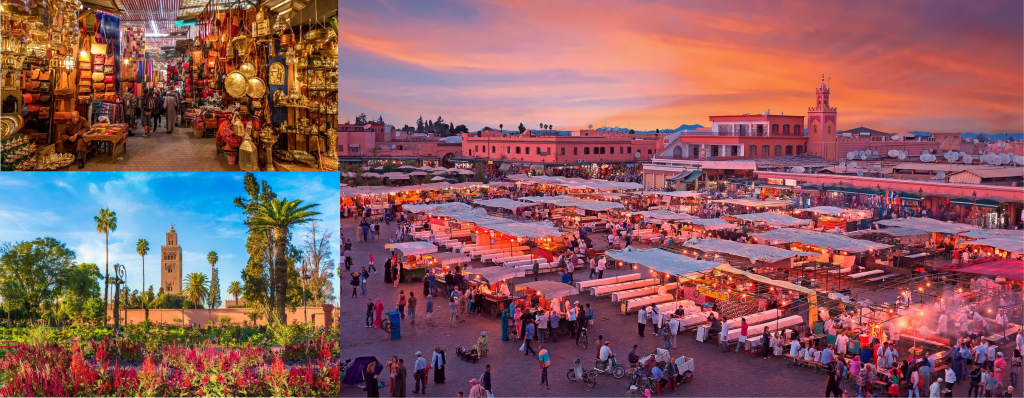
Is Marrakech suitable for coeliacs?
Yes, but with care. Moroccan food is built on spices, slow-cooked vegetables and meat, and many traditional dishes are naturally gluten free. Tagines, grilled kebabs and many salads are usually safe choices. The main traps are khobz, the everyday bread, and couscous, which is made from wheat semolina and is everywhere.
Unlike many European cities, Marrakech does not have a widespread “gluten-free” culture or the same presence of coeliac associations. That means you cannot assume staff will automatically know how to prevent cross-contamination. My tip is to always explain clearly that you have coeliac disease and to ask specific questions about fryers, shared boards, sauces and how they handle bread near the plate. When in doubt, choose simple grilled or stewed dishes and ask the cook to use clean utensils.
Where to stay in Marrakech if you eat gluten free
Choosing the right place to sleep can make the trip much easier. In Marrakech I recommend staying in a riad whenever possible. Riads are traditional guesthouses inside the medina with a personal touch. Staff are often local and used to adapting meals; many will happily prepare gluten-free breakfasts and explain ingredients.
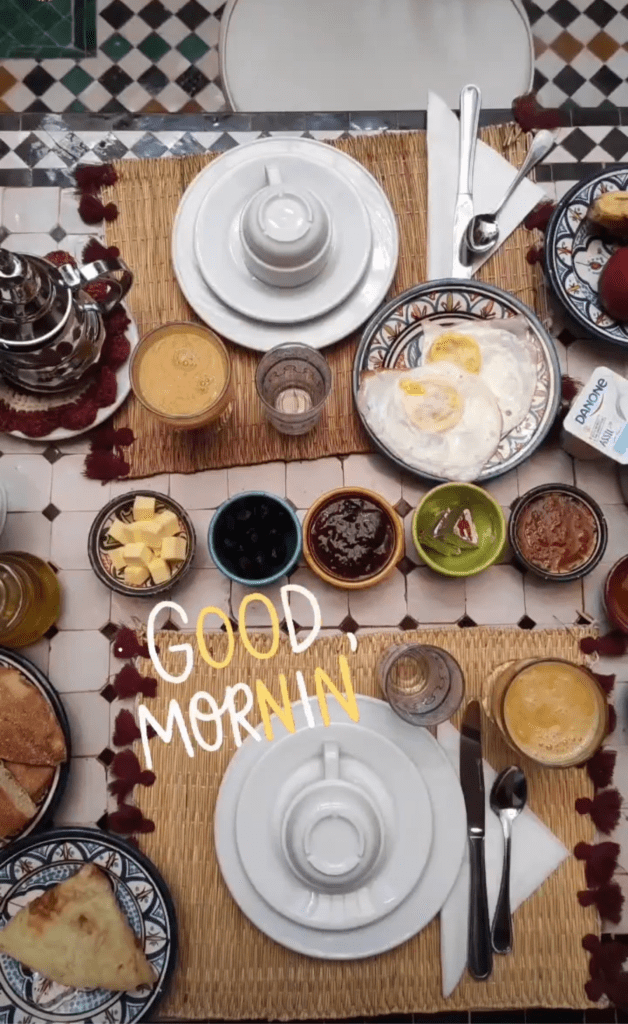
We stayed at Riad Villa Sidi Baba, and it was a great choice. Location was ideal for walking to sights, reviews were excellent, and the team understood coeliac needs from day one. They prepared breakfasts tailored to us: fresh fruit, eggs, gluten-free bread and sometimes a homemade sweet. That combination of warmth and safety made our stay stress-free and memorable.
If a riad is not available, consider an apartment or Airbnb with a kitchen. Having a small kitchen gives you total control over breakfasts and snacks and is a great backup if you worry about communication in markets or small cafés.
Don’t forget your travel insurance
Although travelling gluten free in Marrakech can be easier than you expect, it’s essential to travel with a solid insurance policy that covers health incidents and trip disruptions. This matters even more when you have dietary restrictions or an autoimmune condition.
A good travel policy should include:
- Immediate medical assistance, in case of food poisoning, severe reactions or other emergencies.
- Cover for flight cancellations and significant delays.
- Access to translators or legal support if you need help explaining your situation.
- Reimbursement for medical bills and emergency medications.
- Protection for luggage and personal items (handy if you carry specialty GF food).
If you don’t have travel insurance yet, use this link to get a quote and apply for 5% extra discount 👉👉Here👈👈
Quick checklist before you go:
- Confirm policy limits for medical expenses and repatriation.
- Check whether pre-existing conditions are covered and whether you must declare them.
- Keep printed and digital copies of your policy and emergency contact numbers.
- Pack a list of medications (generic and brand names) and a doctor’s note if needed.
- Save the insurer’s emergency phone number in your phone.
Note: this is practical guidance, not medical advice. For medical recommendations, speak with your GP or a travel health clinic.
Probiotics for a smoother gluten-free trip to Marrakech
When you travel to places with different food, water and microbes, your digestive system can be stressed. For everyone, but especially to people who follow a gluten-free diet or have gut sensitivity, taking probiotics can help keep your gut flora balanced and reduce digestive upsets.
Why consider probiotics before and during the trip?
- They help maintain a healthy gut microbiome and support digestion.
- They may reduce the severity of mild digestive disturbances from dietary changes.
- Starting a probiotic a couple of weeks before you travel can give your gut time to adjust.
Practical tips
- Start 1–2 weeks before departure and continue throughout your trip, especially if you expect to eat food that’s different from your usual diet.
- Choose a broad-spectrum probiotic with well-known strains (for example, Lactobacillus and Bifidobacterium families). If you have severe gut issues, consult your doctor for a recommended product.
- Keep probiotics in your carry-on (check storage instructions; some need refrigeration).
- Probiotics are a complement, not a cure—careful food choices and good hygiene remain the most important measures.
Want to read more? Click here for a detailed guide on probiotics and travel
Packing tip I never skip
I always have a small travel kit: probiotics, a few safe snacks, a printed translation card and copies of my prescriptions. It gives peace of mind and saves a lot of hassle in markets and small cafés.
Gluten-free travel cards
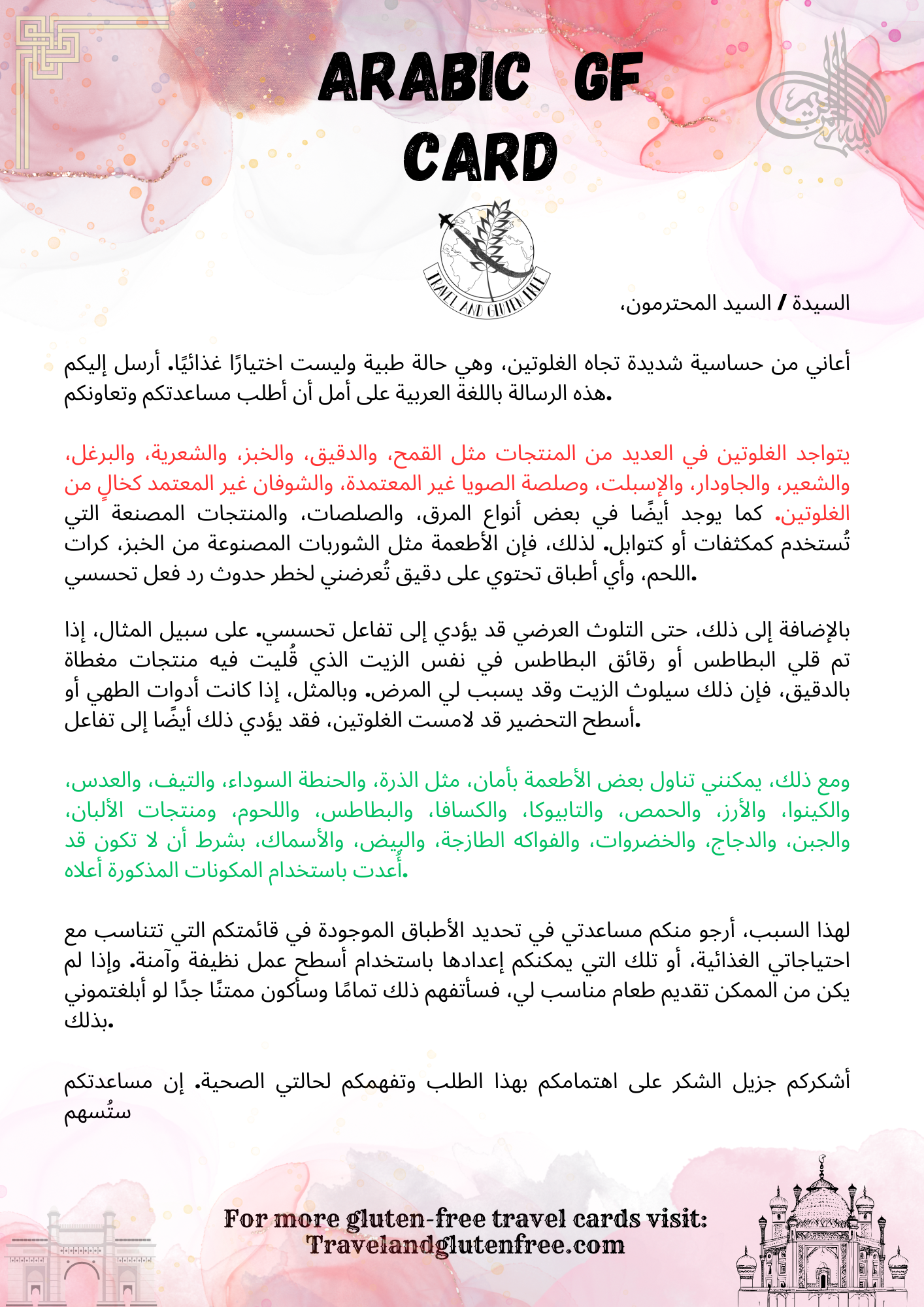
In Morocco the main languages are Arabic and French, though in tourist areas you’ll often find staff who speak English, Spanish or Italian. Still, because coeliac disease needs a very clear explanation, it’s essential to carry simple, printed cards you can show at restaurants, markets and riads. Print several copies, laminate them and keep one as a screenshot on your phone.
Below you have two ready-to-use cards: French and Arabic. Copy them into a small PDF or image, print and laminate. They really speed up communication and cut the chance of mistakes.

Best Marrakech gluten free restaurants
Wondering where to eat in Marrakech without risking your health or missing out on Moroccan flavour? Below is a curated list of the best cafés, bakeries and restaurants for Marrakech gluten free travellers. These picks are based on personal experience, recommendations from coeliac travellers and recent reviews. Always call ahead or mention your needs when you book.

Restaurant Dar Tazi Marrakech & Gluten Free – For me this is the top spot in Marrakech for coeliacs. The owner is coeliac, and the whole team takes gluten safety seriously. The restaurant offers a full gluten-free menu with starters, main dishes and desserts adapted to be 100% gluten free, including versions of couscous and traditional tajines, plus homemade gluten-free bread and sweets such as mahalabia and mhancha. Ideal for eating like a local without worrying about cross-contamination. Book ahead and mention “coeliac” when you reserve.
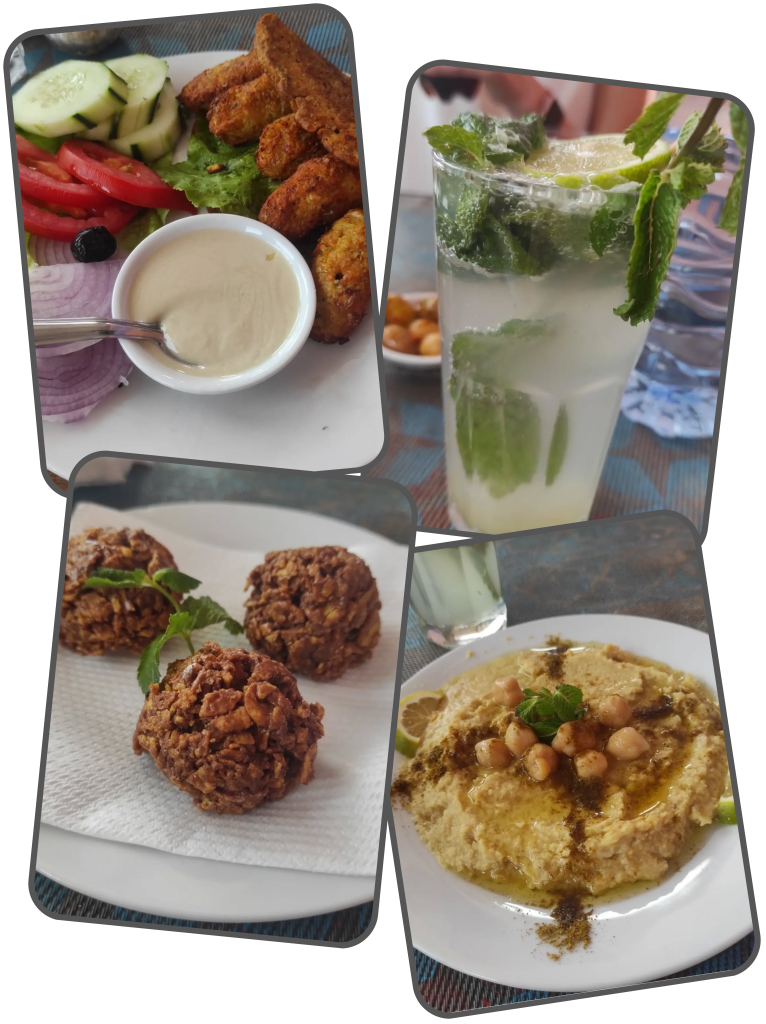
Henna Art Café – A charming café that pairs henna art and relaxed vibes with clearly labelled gluten-free options. Staff are trained and friendly. A stand-out treat is their amlou cookies made with argan oil, almonds and honey a rare and delicious GF sweet. Great for a light snack and relaxing away from the busiest souk alleys.
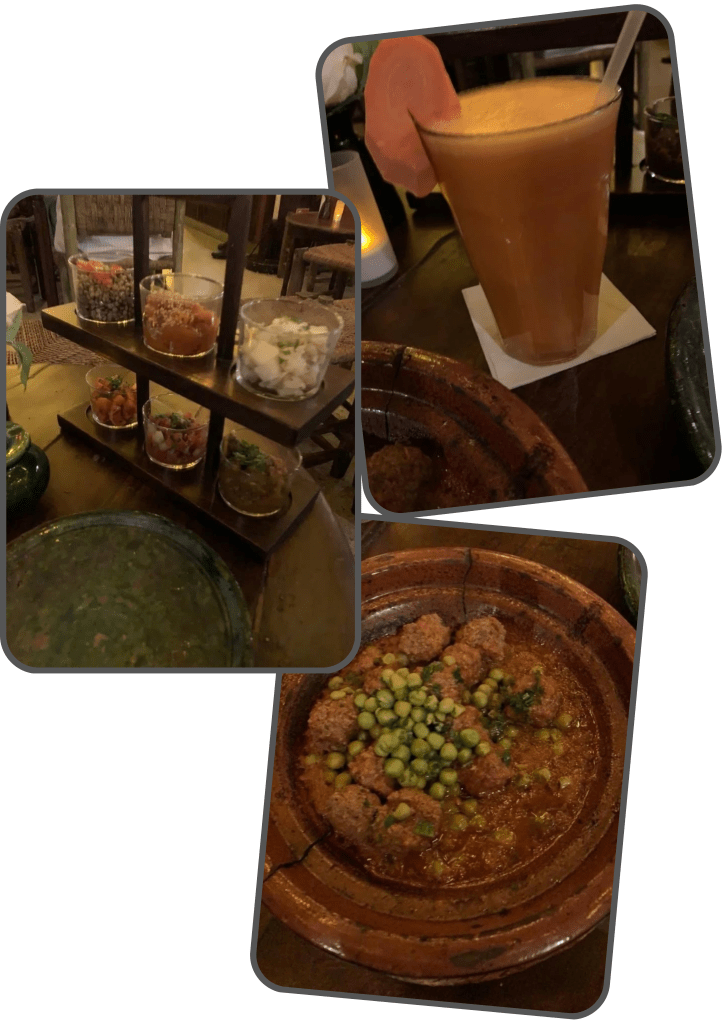
Zeitoun Café – This café has one of the best viewpoints to watch Jemaa el-Fna transform at dusk. The menu indicates gluten-free dishes, though the kitchen is not fully GF, so you must confirm each plate. A good choice for tea, light meals and sunset views; perfect for a relaxed stop while exploring the square.

NOMAD – Modern, elegant and with a striking terrace, NOMAD is one of the safer higher-end choices in Marrakech. The staff are attentive and the kitchen marks gluten-free dishes on the menu. Prices are above average but the careful preparation and the gluten-free desserts (try the orange cake) make it worth it for a special evening.
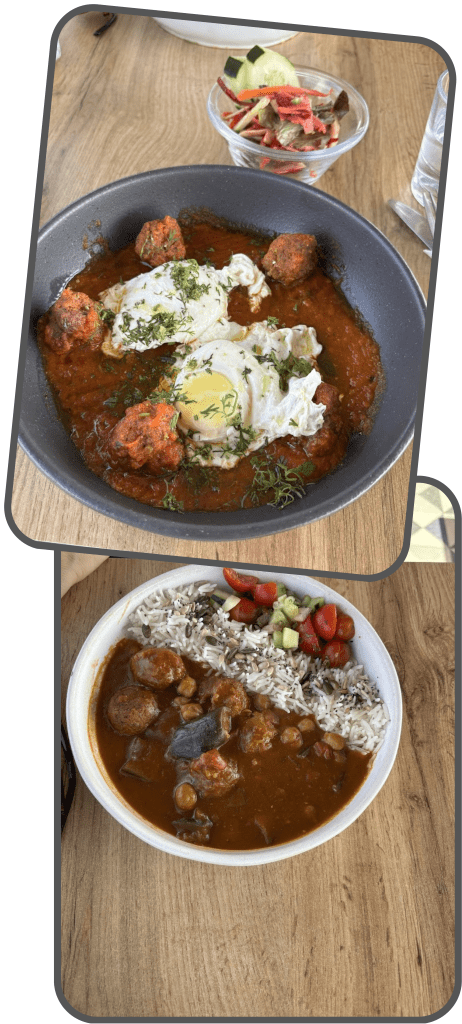
Ayaso – A terrace restaurant with a varied menu and many dishes that can be made gluten free: hummus, kefta, different tagines and homemade desserts like a gluten-free carrot cake. Good atmosphere and a solid option near the central areas for a healthy, tasty lunch or dinner.

Pepe Nero Restaurant – An elegant Italian-Moroccan restaurant with attentive service. They understand coeliac requirements and clearly label GF options. If you need bread, they can provide commercial-type gluten-free sliced bread for starters. A good pick when you want a break from local cuisine but still need safe choices.
Taj’in Darna – Known for an extensive tajine offering and a lively atmosphere, Taj’in Darna can adapt many dishes for coeliacs. It is not fully GF, but staff are helpful and transparent about preparation methods. Good for a classic Moroccan dinner with attentive service.
Café des Épices – Recommended by several coeliac travellers and local reviews. I didn’t visit personally, but menus and community feedback indicate GF options. If you are in the area and want a casual stop, ask about cross-contamination (fryers and shared boards) before you order.
Le Jardin – A hidden garden oasis in the souk maze. According to online information they clearly mark gluten-free dishes, including desserts. It’s a peaceful spot for a relaxed meal away from the busiest streets.
La Trattoria Marrakech – An Italian option in the modern Gueliz district. Many coeliac travellers report that the chef comes out to discuss dietary needs and prepares safe alternatives. Good option if you want pizza or pasta with dedicated GF handling.
Bakeries and pastry shops

Mon Quotidien – A bakery with a fully separate gluten free section. Everything is prepackaged and clearly labelled to avoid cross contamination. Their breads and pastries are excellent and staff take pride in the GF range. If you want safe bakery goods for breakfasts or picnics, this is a top pick on your Marrakech gluten free route. Check opening hours before you go and bring cash just in case.
Maison Sans Gluten – According to what I could find, Maison Sans Gluten is a 100 percent gluten free bakery that works mainly by order. They claim traditional pastries and breads are all GF, but they are not very active on social media and bookings are recommended. If you plan to rely on them, contact ahead and place an order a few days before your visit. If you want, use this short message when you email or WhatsApp them.
Gluten-free supermarkets in Marrakech
Sans Gluten Marrakech – A small, 100% gluten-free shop on Av. Achjar, Marrakech 40000. It stocks a carefully selected range of products, both local and imported, and is ideal for filling up on staples before day trips or desert excursions. Expect packaged breads, flours, snacks, ready meals and local sweet treats that are naturally gluten-free. Check opening hours before you go and consider calling ahead for big orders.
Fez gluten free
If your trip includes a stop in Fez, don’t miss our dedicated guide for Fez gluten free. It covers where to eat, safe bakeries and practical tips for navigating medina stalls with coeliac needs. Read it 👉here👈
Enjoy Marrakech gluten free
Eating gluten free in Marrakech is absolutely possible and can be a delicious part of the trip when you plan ahead. With the right tools your printed translation cards in French and Arabic, a good travel insurance policy and a small kit with probiotics and safe snacks you can enjoy tagines, grilled meats and many local sweets without worry.
This guide is based on up-to-date checks, on-the-ground experience and community feedback. Travel conditions and menus change, so please leave a comment below if you visit a place and want to share an update or review. Your feedback helps keep the guide fresh and useful for fellow coeliac travellers.

 travelandglutenfree
Un comentario en “Marrakech gluten free where to eat safely. Practical guide for coeliacs”