
A Culinary Journey from Malacca to the Perhentian Islands
I have dedicated countless hours researching and creating this Gluten-Free Travel Guide to Malaysia, and I am thrilled to finally share all the best places to eat safely across the country. From the bustling street food stalls of Kuala Lumpur to the grilled seafood feasts on the Perhentian Islands, this guide covers it all. It hasn’t been an easy task, but it has been incredibly rewarding. While this guide is longer than expected, I highly recommend reading it thoroughly so you don’t miss any essential tips and insights.
Malaysia becomes a much safer destination when you know which foods are naturally gluten-free and which ones are not.
In this Gluten-Free Travel Guide to Malaysia, you’ll find: A complete list of gluten-free foods that you can enjoy. A guide to traditional Malaysian dishes that contain gluten, so you can avoid them. Recommendations for the best gluten-free restaurants in each major tourist destination. Essential travel tips for navigating food safety and cross-contamination concerns.
Let’s embark on a gluten-free journey through Malaysia and discover the best places to eat safely while enjoying the country’s incredible culinary diversity!
- The Best Gluten-Free Travel Card
- 5% discount in your travel insurance
- What You Need to Know About Gluten-Free Travel in Malaysia
- Getting a Good Travel Insurance Plan
- Facebook Support Groups for Gluten-Free Travelers in Malaysia
- Discovering Malacca Gluten-Free
- A Gluten-Free Experience in Kuala Lumpur
- Gluten-Free Dining in Cameron Highlands
- Gastronomic Adventures in Penang
- Gluten-Free Restaurants in Langkawi
- A Gluten-Free Adventure in the Perhentian Islands
- Naturally Gluten-Free Dishes in Malaysia
- Malaysian Dishes That Contain Gluten
- Gluten Free travel Guides
The Best Gluten-Free Travel Card
This might sound like an overstatement, but since I started using gluten-free travel cards, my risk of gluten contamination has significantly decreased. Compared to other similar cards, this one is more detailed and comprehensive, covering cross-contamination risks, restricted ingredients, and safe food alternatives. Having a reliable way to communicate your dietary needs is crucial in a country where the word “gluten” is not widely understood. Keeping these cards handy can be a lifesaver when dining out.
✅ Why use a printed card? Although you can download these cards to your phone, the most efficient way to use them is to print and laminate them. This allows you to hand the card directly to the waiter, who will then show it to the kitchen staff, and eventually, you might even find yourself having an interesting conversation with the chef about their cooking techniques, kitchen utensils, and ingredients. By doing this, you ensure that the entire team understands your dietary restrictions, making for a much safer dining experience.
✅ Which languages should be included? Aside from the Malay version, I highly recommend printing the English version on the other side. Most Malaysians have a high level of English proficiency, making it easier for them to understand your requirements.
👇👇But don’t worry. Here you can find them👇👇
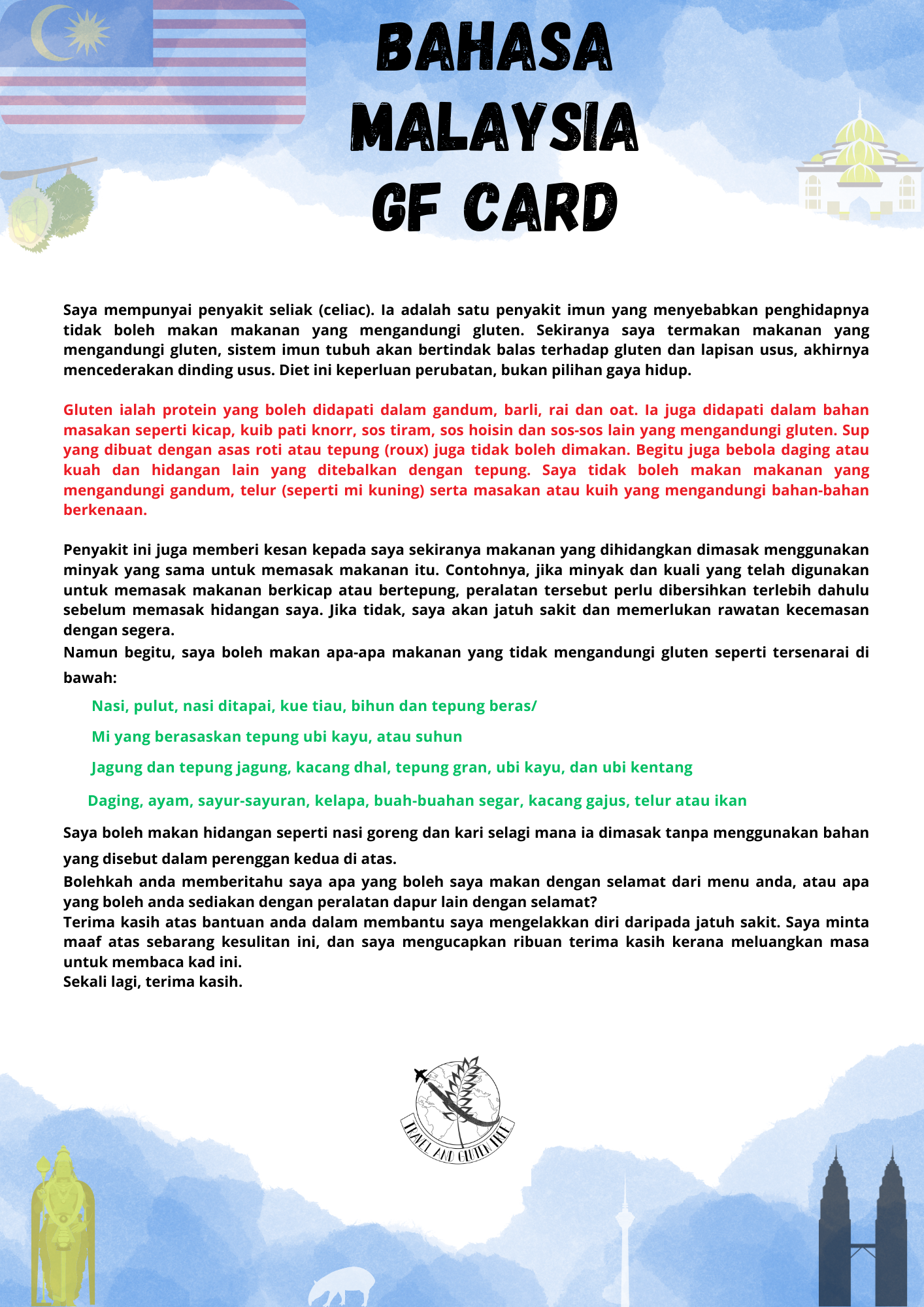
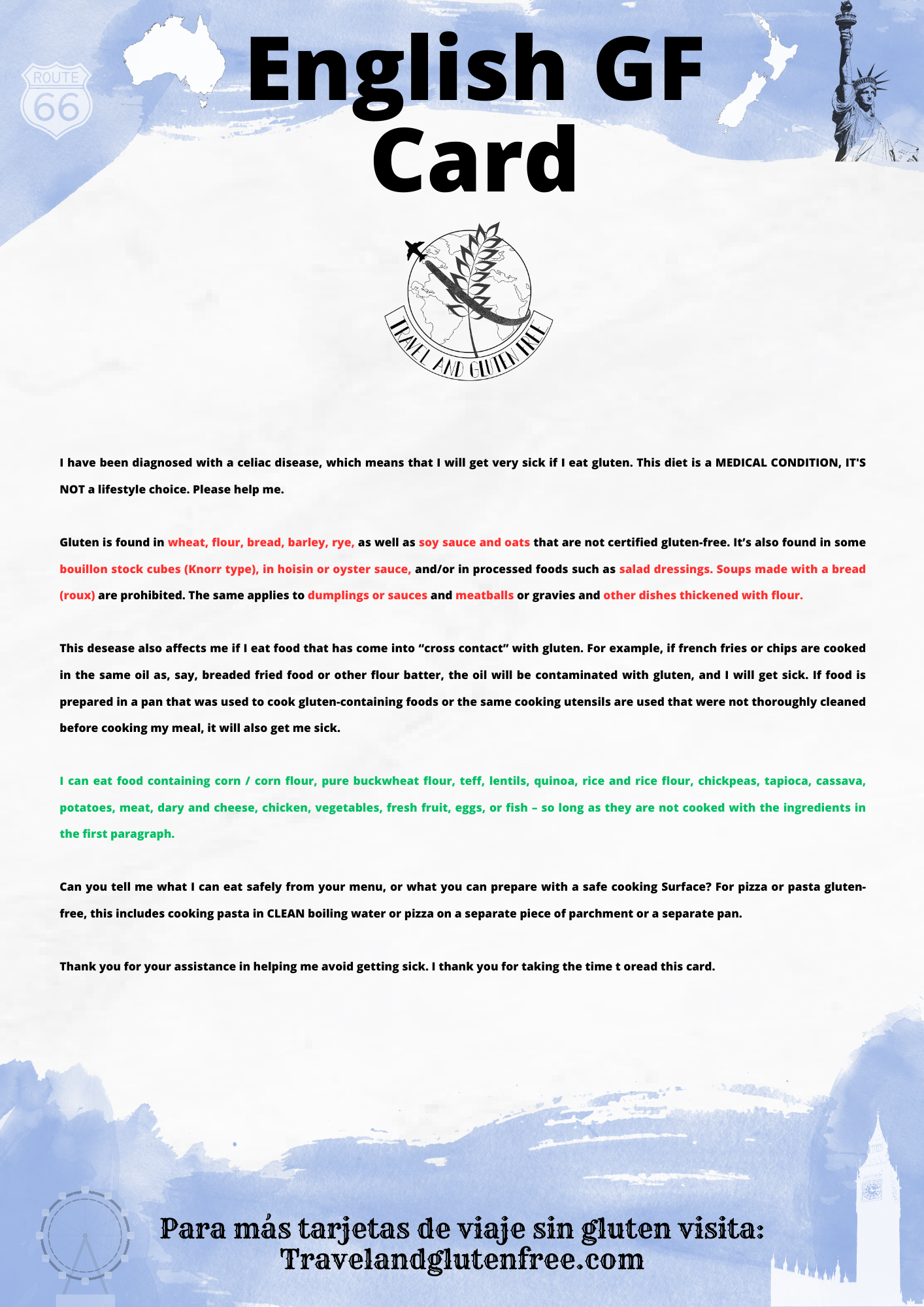
If you don’t have your travel insurance yet, 👉👉here👈👈 you can calculate the price with an extra 5% discount.
What You Need to Know About Gluten-Free Travel in Malaysia
Malaysia has very little awareness of celiac disease, and the concept of gluten-free eating is not widely understood. This is why preparation is key to avoid consuming something that might make you sick.
Language Barrier & Communication While 90% of the population speaks English fluently, it is still essential to clearly explain your dietary needs. Unlike many Western countries, Malaysia does not have a strong gluten-free culture, so ensuring that restaurant staff fully understands your request is crucial.
Mobile Data & Translation Apps If you’re not confident in English, I highly recommend getting an unlimited data SIM card. This will allow you to use translation apps like Google Translate to communicate more effectively. Additionally, having mobile data gives you instant access to maps, restaurant reviews, and gluten-free dining recommendations. This is a must-have for all my trips since it allows me to navigate easily without relying on public WiFi.
The Importance of Probiotics for Your Trip
Gluten contamination isn’t the only concern when traveling in Southeast Asia. There are many microorganisms and environmental factors that can affect your digestive health. While I explain this in greater detail in my article on celiac disease and probiotics, here’s a quick summary.
Why Probiotics Matter?
Food and drink contamination is the leading cause of traveler’s illness, with Traveler’s Diarrhea being the most common symptom. This can also include fever and vomiting, and as celiacs tend to have more sensitive digestive systems, preventing this is not just a precaution—it’s a necessity. Despite being careful with food and water, contamination can occur through microscopic bacteria, viruses, and parasites found in rivers, tap water, and even some foods. That’s why I always include a probiotic regimen in my travel preparation.
Cultural Attitudes Towards Health & Food Safety
One of the greatest advantages of traveling in Malaysia is how seriously people take health and food safety.
Respect for Dietary Needs: When you tell a restaurant staff member that gluten makes you sick, they immediately raises awareness. Many Southeast Asian cultures view making someone ill as a significant offense, which means they take your request seriously. Chefs and servers will do their best to accommodate your needs, and if they believe they can’t offer you a safe meal, they’ll tell you outright rather than risk serving you something harmful. Personally, I prefer an honest “I’m sorry, we can’t guarantee it’s safe” rather than ending up sick from cross-contamination.
Getting a Good Travel Insurance Plan
This is a must-have for any trip outside the European Union or EE. UU. Your health is priceless, and as I always say, the best insurance is the one you never have to use. However, food poisoning, an accident, or even an unexpected appendicitis can become incredibly expensive when you’re far from home—not just financially, but also in terms of stress and accessibility to medical care.
Why You Should Get Travel Insurance?
- Medical Emergencies: Covers hospital stays, doctor visits, and medications.
- Trip Cancellation Coverage: Many plans now include trip cancellations, allowing you to recover up to 80% of your investment.
- Emergency Evacuations & Repatriation: Essential for serious accidents or health conditions.
- Affordable Plans: Travel insurance has become much more accessible in recent years.
A comprehensive plan provides financial security and peace of mind, allowing you to fully enjoy your trip without unnecessary worries.
If you don’t have your travel insurance yet, 👉👉here👈👈 you can calculate the price with an extra 5% discount.
Facebook Support Groups for Gluten-Free Travelers in Malaysia
Finding reliable information outside of this blog can be difficult, but these two Facebook groups are great resources where local celiacs and gluten-intolerant travelers share their experiences, new restaurant discoveries, recipes, and helpful tips.
For Kuala Lumpur: [Gluten-Free Support Group in Kuala Lumpur]
For Penang: [Gluten-Free Support Group in Penang]
These groups can be invaluable for staying updated on new gluten-free restaurants, supermarket finds, and traveler experiences!
With all these essential tips, you’ll be well-prepared to explore Malaysia safely and gluten-free!
Ask everything
When it comes to eating safely in Malaysia, question everything. It might seem excessive, but asking detailed questions can prevent unwanted gluten exposure. For instance, I once ordered an omelet, and just as I was about to take a bite, a kitchen staff member rushed over to tell me it was not meant for me—they had added a thickener that could have contained wheat. Luckily, I had already shown the manager my translated gluten-free card, so they caught the mistake just in time. This just goes to show that even a simple dish like an omelet can contain hidden gluten.
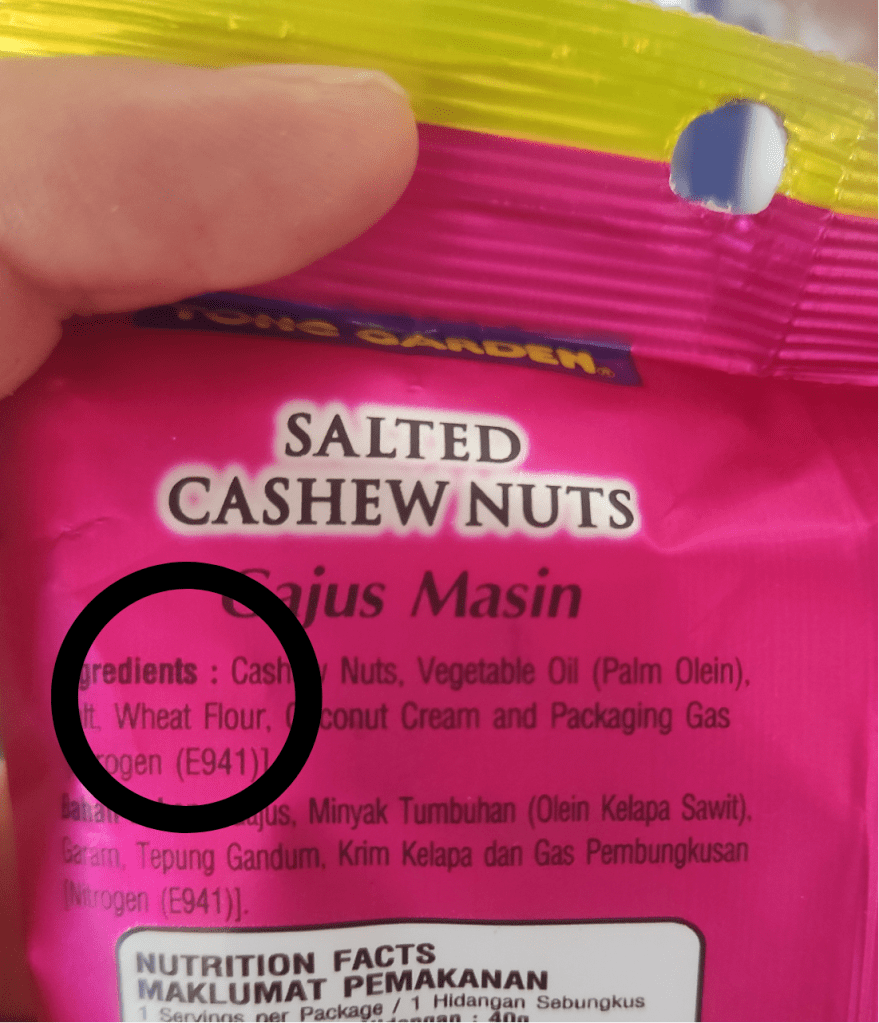
Check Packaged Foods: When buying nuts or snacks, always read the ingredient list carefully. Look out for terms like wheat or flour, as they indicate gluten contamination.
Be Careful with Spicy Food
Malaysia is famous for its spicy cuisine, but be warned—everything is spicy, even if they say it isn’t! If you ask a local whether a dish is spicy, they might tell you “no,” but their definition of “mild” is often much stronger than what most Europeans are used to.
How to Handle the Heat? If you find yourself eating something too spicy, don’t panic. The best remedy is to find a street vendor selling milkshakes and order one with extra milk. Dairy products help neutralize the burning sensation much better than water. Pro tip: Go for mango or banana milkshakes—they’re delicious and refreshing!

Discovering Malacca Gluten-Free
Casa del Rio – Located in a charming hotel by the river, Casa del Rio offers an exceptional gluten-free dining experience. The welcoming staff provides detailed guidance on gluten-free options, ensuring a safe and delicious meal. Their must-try Nasi Lemak, a traditional Malaysian dish, is a flavorful delight. If you inform them in advance, they will also prepare gluten-free desserts to sweeten your experience. Enjoy the rooftop pool and panoramic river views from the hotel’s balconies—making this a top accommodation recommendation for a complete stay.
Wild Coriander – Immerse yourself in the authentic flavors of Malaysian cuisine at Wild Coriander. This restaurant offers a unique gluten-free dining experience, with their Vegetarian Rendang standing out as a star dish. Served alongside their famous blue rice, it is a visually stunning and delicious meal. For dessert, don’t miss their Cendol and Sago with Coconut, both exquisite gluten-free options.
Salud – While the staff at Salud is friendly, their understanding of gluten-free diets is somewhat limited. However, their paella, made with natural ingredients and no preservatives, is a safe and gluten-free choice. Though they could improve their knowledge of celiac-safe food preparation, their emphasis on fresh ingredients makes this a reliable option for those craving Spanish cuisine in Malacca.
A Gluten-Free Experience in Kuala Lumpur
The vibrant capital of Malaysia is home to a growing selection of gluten-free restaurants, ranging from high-end dining experiences to street food stalls where you can enjoy traditional Asian sweets like Khao Niao and Putu Bambu, both naturally gluten-free.
Urbean – A great choice near the Petronas Towers, Urbean offers a variety of gluten-free-friendly meals, although the selection is limited. Their dishes focus on quinoa, vegetables, and chicken, making it a good nutritious option close to Kuala Lumpur’s iconic landmarks.
Manja – A fine dining restaurant with a diverse menu and price range, perfect for special occasions. From a refreshing watermelon ceviche with coconut tartare to traditional Malaysian dishes like Gunda Gunda, this spot offers a mix of local and international flavors. Make sure to book in advance and inform them of your dietary requirements to ensure a safe gluten-free experience.
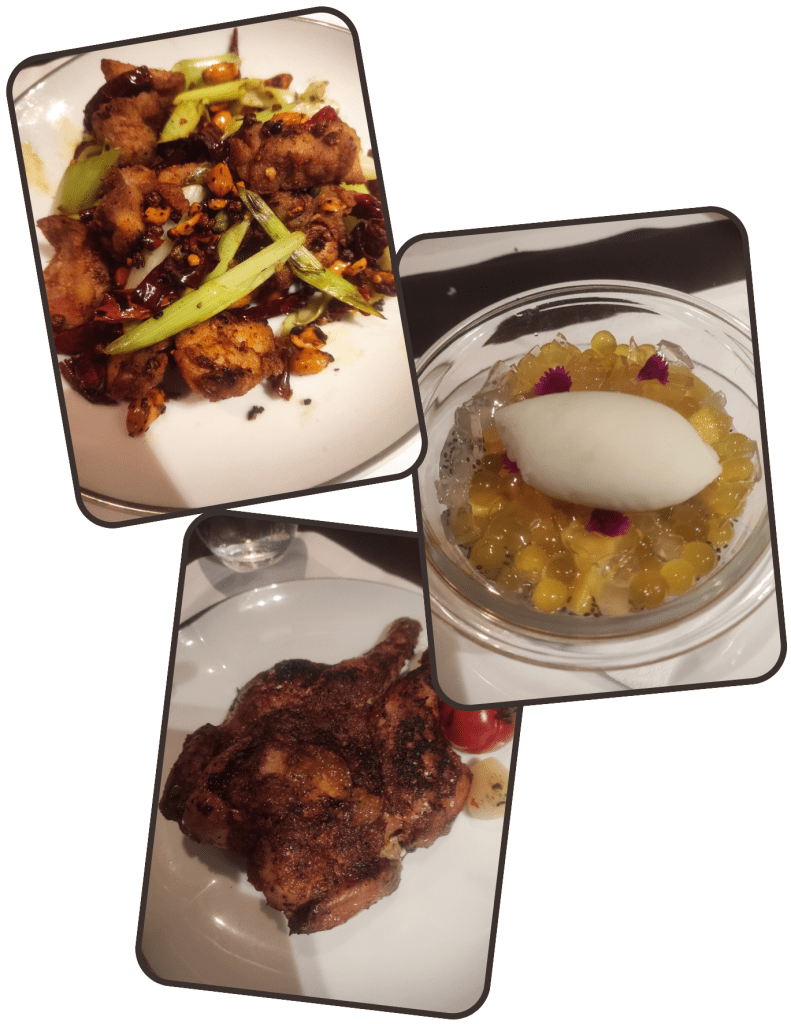
Thirty8 – Located at the top of the Grand Hyatt, Thirty8 provides a glamorous dining experience with spectacular views of the Petronas Towers. The Coconut Cremeux is a must-try dessert, and for those who enjoy a challenge, the Sichuan Style Wok-Fried Chicken comes with twelve whole chilies, making it a fiery Malaysian dish—proceed with caution!
Fuego Troika Sky Dining – This rooftop restaurant offers breathtaking city views and gluten-free options. As it’s a popular dining spot, make sure to book a table in advance and notify them of your dietary restrictions.
Atmosphere 360, Kuala Lumpur – Another luxury dining experience with stunning panoramic views of the Petronas Towers. While gluten-free options are available, the high prices led us to explore other locations with similar views at more affordable rates.
Skillet – A Michelin-starred restaurant in Kuala Lumpur (2023), Skillet offers a refined gluten-free dining experience. While the prices are on the higher side, this is a great choice for those seeking a premium culinary experience. We ultimately chose not to dine here, but in our research, we found that Skillet is well-informed about gluten-free requirements and ensures a safe meal for celiacs.

The Hungry Tapir – A 100% vegetarian restaurant, The Hungry Tapir offers limited but delicious gluten-free options. Their sweet potatoes and tofu skewers with rice are standouts, served with crispy rice papadum, a gluten-free delight. Don’t leave without trying their Hulk smoothie!

Old Shanghai – A centrally located Malaysian restaurant with many gluten-free options. Ask for Ricardo, who was incredibly accommodating and loved the gluten-free travel card in English. He will guide you through safe meal choices—but beware of the spice levels! Their Angus Beef Rendang is a must-try, though it set my mouth on fire despite being labeled as ‘mild’.
Fittie Sense – A North African-inspired restaurant with several gluten-free dishes. While not exclusively gluten-free, their menu offers many safe choices infused with North African flavors.
Pomo d’Oro – A perfect spot for gluten-free pasta lovers. Make sure to request that the pasta is cooked in a separate pot to avoid cross-contamination.
Crust – A safe and delicious choice for gluten-free pizza, burgers, and pasta. While the staff is aware of celiac disease, always remind them about cross-contamination risks and request separate utensils and cooking spaces to ensure a completely gluten-free experience.
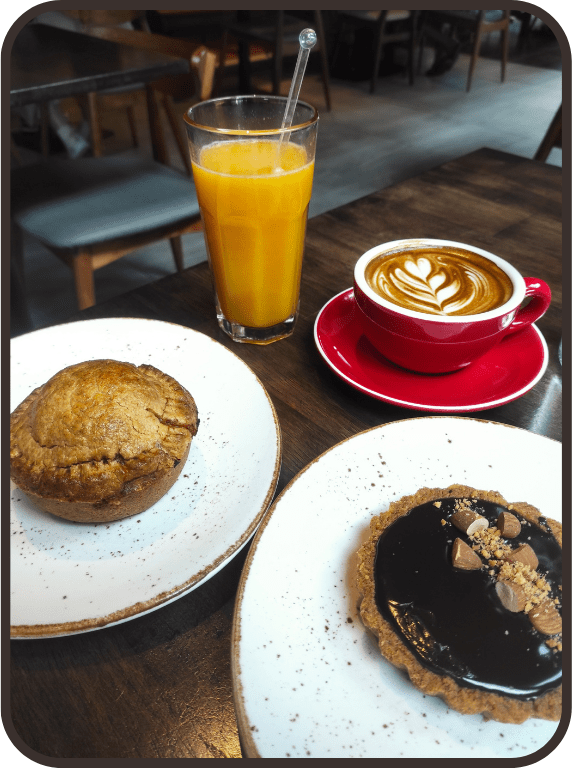
Nourish by Kenny Hills Bakers – A must-visit café offering gluten-free breakfast, lunch, and dinner options. With an extensive menu tailored for celiacs, this spot is known for having some of the best gluten-free desserts in Kuala Lumpur.
RGB – Another great café with gluten-free options. Although we didn’t visit, RGB is well-known for catering to celiac needs and offers a safe dining experience.
WheatFree For You Gluten Free Bakery – If you’re craving freshly baked gluten-free bread, this is your go-to spot. A 100% gluten-free bakery with a fantastic selection of baked goods to satisfy your cravings.
Many Indian restaurants, especially those specializing in South Indian cuisine, offer naturally gluten-free options. If you communicate your dietary restrictions and show your gluten-free travel card, you’ll likely find safe meals to enjoy.
Ganga Café – This restaurant is familiar with gluten-free requests, and both the kitchen staff and waiters are knowledgeable about celiac-safe dining. A solid choice for authentic Indian cuisine.
WtF Restaurant – A popular celiac-friendly restaurant among locals. While I didn’t have the chance to visit, many trusted sources confirmed it’s a great gluten-free dining spot. Be sure to ask staff for clear, safe meal options.
Tasty Chapati – Another great South Indian restaurant. As with the others, ensure they can safely prepare gluten-free dishes before ordering.
Kind Kones – Satisfy your gluten-free ice cream cravings at Kind Kones. Their cones and ice creams are 100% gluten-free, making it a safe and delicious option. There are three locations across the city.
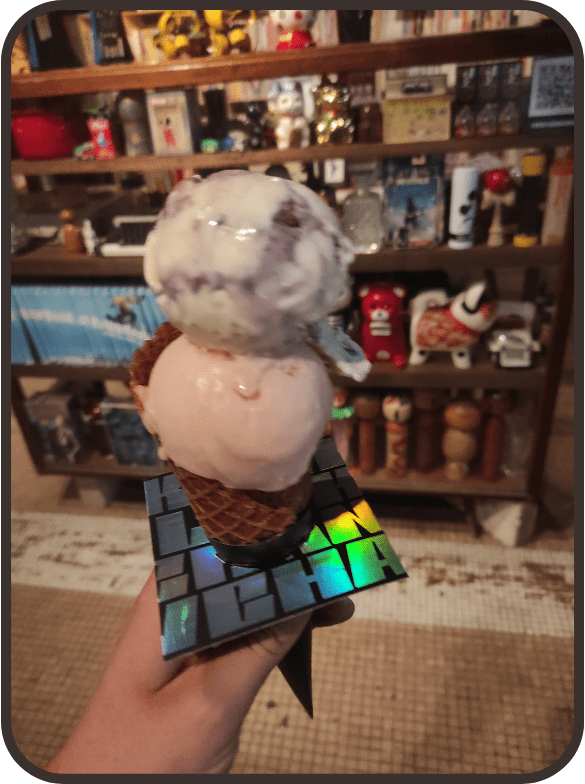
LickyChan – One of the best gluten-free ice creams I’ve ever had! While not entirely gluten-free, most of their flavors and cones are safe. They even offer creative flavors infused with alcohol—I personally loved the cheese & blueberry and melon, cucumber & maraschino liqueur flavors.

Putu Bambu Tradisi – A street food must-try! Located beside the Central Market, Putu Bambu is a naturally gluten-free Indonesian dessert made from rice flour, palm sugar, pandan leaves, and coconut. Watching them steam the cakes inside bamboo tubes is part of the experience!
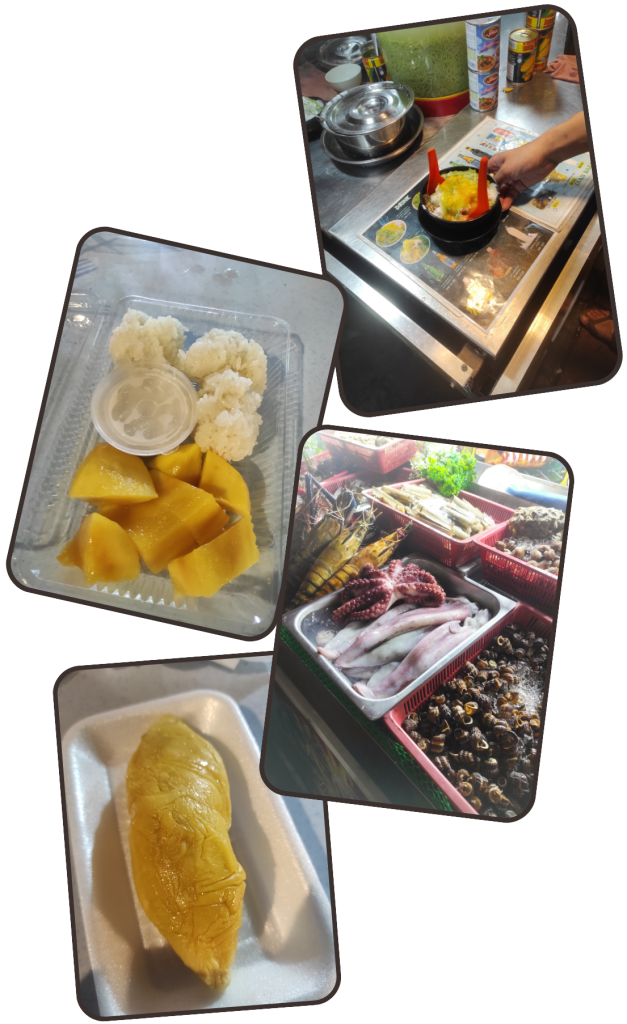
Jalan Alor – While not a gluten-free paradise, Jalan Alor offers a unique culinary adventure in Kuala Lumpur. Here, you’ll find: Durian – The infamous “smelliest fruit in the world.”Khao Niao Ma Mango – A delicious Thai dessert of sticky rice, mango, and coconut milk. Wagyu beef steaks – One of the world’s finest cuts of meat. Street-grilled seafood and meat skewers – Some are likely gluten-free, but exercise caution with sauces and marinades.
Even if you don’t eat much, Jalan Alor is a must-visit at night, whether you’re celiac or not!
Gluten-Free Dining in Cameron Highlands

Shingh Chapati Urban – A haven for gluten-free travelers in Cameron Highlands, this Indian restaurant offers an array of safe dishes. While Chapati and Paratha contain gluten, their Chicken Masala, vegetarian options, and rice dishes are all safe for celiacs. Plus, it’s an affordable dining choice!

Misokimchi – For an Asian twist, Misokimchi serves Japanese and Korean cuisine with gluten-free options like Fried Veggie Bibimbap and New Zealand Grilled Mussels.
Barracks Cafe – After showing my gluten-free travel card, the chef confirmed that I could safely enjoy grilled meats and a delicious ratatouille. Just be mindful of their early closing hours—we arrived at 9 PM and found it already closed!
Gastronomic Adventures in Penang
Penang is known as one of Malaysia’s top food destinations, where culture and cuisine go hand in hand. Thankfully, finding gluten-free food in Penang is easier than in many other parts of the country. Here’s a list of restaurants that I personally contacted and felt confident dining at:

Holy Guacamole – You’ll find a wide selection of gluten-free dishes at Holy Guacamole. While the prices may be slightly higher than average in Penang, the quality and variety of food make it well worth a visit.
News Café – A hidden gem offering gluten-free options based on rice dishes with meat or fish. Though the variety is modest, the flavors are rooted in traditional Malaysian recipes. (Be cautious with fish dishes—some cooking styles may overpower the taste.)

Smoke Papa BBQ – A must-visit for barbecue lovers. Enjoy tender grilled meats served with mashed potatoes, rice, or honey mustard. A simple but satisfying meal at very reasonable prices.
SOGO GRILL – The owner is well-informed about celiac disease and offers safe gluten-free dishes. The staff is friendly and will walk you through their recommended safe options, prepared with great care.

Jawi House Café Gallery – A Michelin-worthy culinary experience in Penang. Featuring authentic Indian-inspired dishes, the staff is well-trained in gluten awareness. Don’t miss their Sago File Melaka dessert. Excellent value and a must-visit gluten-free restaurant in Penang.
Gusto Café – The owner is gluten-intolerant, so he understands the importance of cross-contamination. With his guidance, you can safely enjoy gluten-free dishes in a cozy café setting.
Nero Nero – Penang – They offer gluten-free pasta, but be sure to request it be cooked in a separate pot to avoid any cross-contamination.
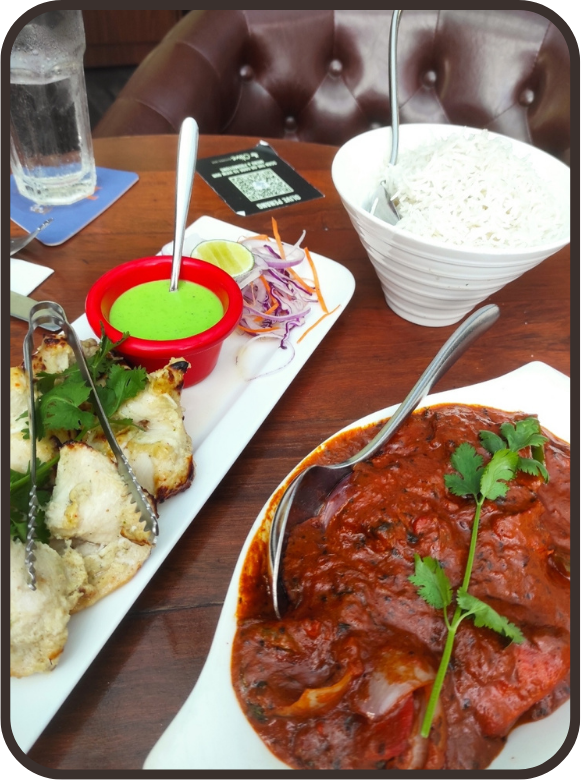
Olive Kitchen Bar Penang – Although not exclusively gluten-free, the chef is accommodating if you show your gluten-free card in English. Recommended dishes include Chicken Tikka, Tikka Masala, and Plain Rice, all prepared with attention and care.
IL Bacaro – Also offers gluten-free pasta. Be sure to ask the kitchen to cook it separately to ensure safe consumption for celiacs.
Gluten-Free Restaurants in Langkawi
Although we didn’t get the chance to visit Langkawi, it’s definitely on our travel wishlist. Still, I gathered valuable recommendations from local sources and gluten-free travelers. Here are three trusted spots you can check out:
Casa del Mar – This hotel restaurant features clearly marked gluten-free options on their menu. The staff is familiar with celiac requirements, and if you notify them in advance, they can prepare gluten-free treats like banana muffins and pancakes for breakfast. Their main dishes also look delicious and safe for gluten-free travelers.
Red Tomato – Known for offering some gluten-free options, including gluten-free pizzas that many reviewers highly recommend. A cozy and casual spot with a reliable approach to gluten-free dining.
The Fat Cupid – While not exclusively gluten-free, several positive reviews from people with celiac disease report being well cared for here. Guests mentioned enjoying gluten-free tortillas, salads, and Beef Rendang. Although I didn’t explore this spot in depth, it seems like a friendly and attentive option worth considering.
A Gluten-Free Adventure in the Perhentian Islands
The Perhentian Islands offer a tropical paradise of sun, sea, and sand, but for gluten-free travelers, the real adventure lies in finding safe food options. It’s not impossible, but definitely more challenging than other parts of Malaysia.
Due to the remote nature of the islands, most food arrives by boat, and much of it is pre-packaged or preserved, which can often contain gluten. However, if you enjoy fresh fruit, rice, corn on the cob, and barbecued fish, you’ll be able to navigate your stay with ease.
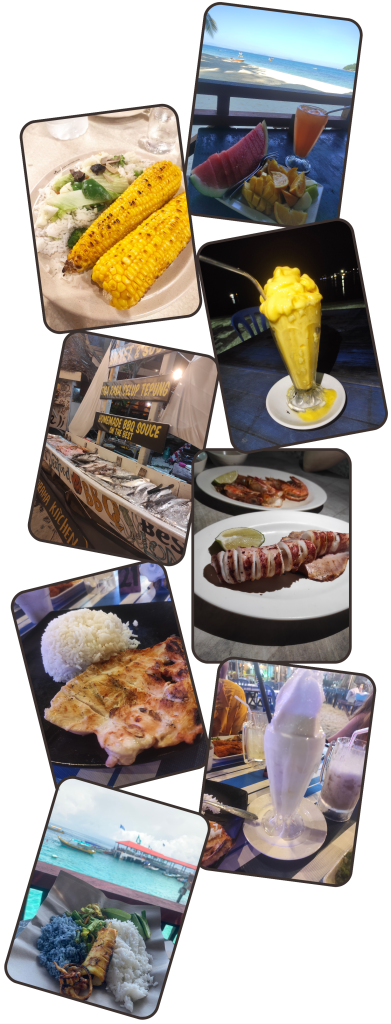
Unlike larger destinations, the Perhentian Islands do not have dedicated gluten-free restaurants. Most dining takes place at hotel restaurants near your accommodation. The most restaurant-dense area is Long Beach on Kecil Island, though prices there are higher than other beaches. It’s also important to note that cash is king—there are no ATMs on the islands, so plan ahead.
Every evening, local hotel beaches light up with barbecues, serving fresh grilled meats and fish depending on the day’s catch.
You’ll also find incredible fresh fruit milkshakes, made by blending fruit and ice into a creamy drink with fresh milk—absolutely delicious. If you have the chance, don’t miss the coconut milkshake made from coconuts picked directly from the palm trees on the beach. ⚠️Be careful with the chocolate ones, they use a variety where they add flour!⚠️
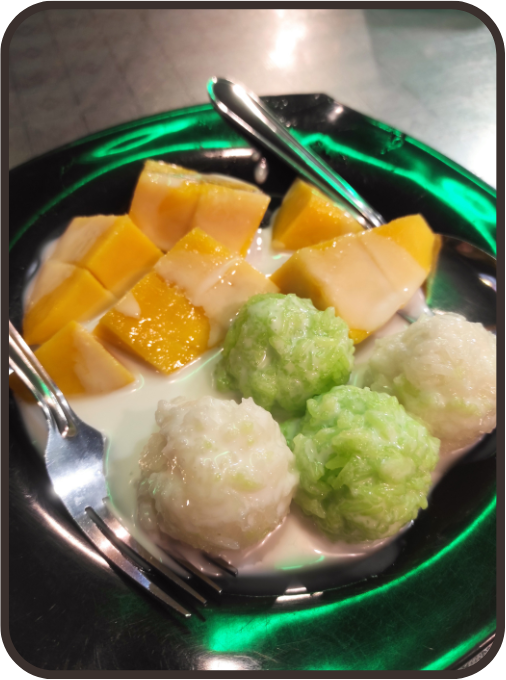
In some restaurants on Long Beach (Kecil Island), you may also find the Indonesian dessert Khao Niao Ma, also known locally by a different name. This dessert of sticky rice (naturally gluten-free), coconut milk, and mango is a must-try.
Be sure to bring your gluten-free travel cards in both English and Malay, which are available on the blog. These cards are essential for communicating your dietary needs clearly and getting safe meals.
Additionally, I recommend stopping by a Marks & Spencer’s the day before your island trip to stock up on gluten-free bread, croissants, or cookies—perfect breakfast backups in case local options are limited.
List of Naturally Gluten-Free Foods in Malaysia
Below is a list of traditional Malaysian dishes that are gluten-free in their original recipes. However, always double-check with the chef or staff to ensure they haven’t added ingredients like soy sauce, oyster sauce, stock cubes, or flour as thickeners, which may contain gluten.
Most of these dishes originate from South Indian cuisine, which heavily influences Malaysia’s culinary scene. These restaurants often don’t use wheat flour, so with good communication and the help of your gluten-free travel card, you can find safe, delicious options.
⚠️ Please note: This list is informative and not definitive. Trust your instincts and only eat where you feel confident.
Naturally Gluten-Free Dishes:
- Appam – Fermented rice flour and coconut milk pancake (bowl-shaped).
- Glutinous Rice – Despite its name, this rice is gluten-free. Think of it as “sticky rice.”
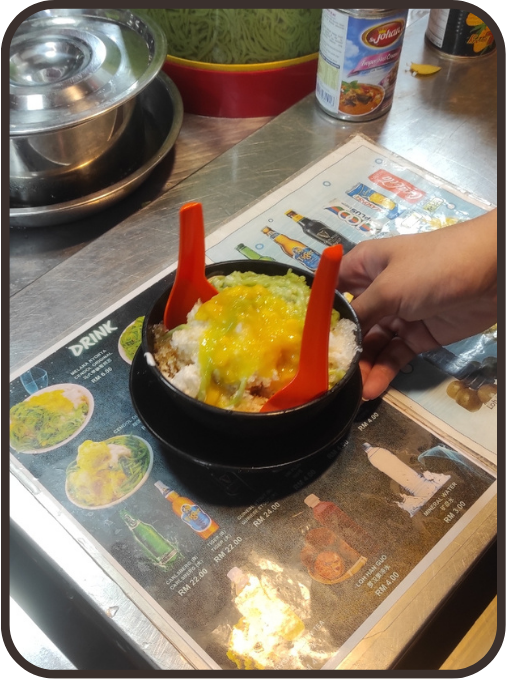
- Cendol – A dessert made from rice flour jelly “worms” in coconut milk, pandan leaf, and palm sugar syrup. Often topped with jackfruit or durian.
- Dosa Masala – Indian fermented crepe made from lentils and rice, filled with potato and spices.
- Dosas/Tosai – Crepes made with rice and lentils (check fillings carefully).
- Kuih – Bite-sized sweets/snacks. Ask for ingredients first.
- Kuih Dadar – Pandan-flavored crepe with sweet coconut filling.
- Kuih Seri Muka – Two-layered kuih with steamed glutinous rice and pandan custard.
- Pulut Panggang – Grilled sticky rice with spicy coconut, wrapped in banana leaf.
- Onde Onde – Sticky rice balls filled with palm sugar and rolled in coconut.
- Kuih Talam – Steamed pandan cake.
- Kuih Lapis – Multicolored layered cake.
- Kuih Bingka – Tapioca cake with a coconut layer.
- Pulut Inti – Sticky rice with coconut milk topping.
- Laksa – Spicy coconut milk soup with rice noodles (be careful with the type of noodles, especially “mee” = wheat).
- Lemang – Glutinous rice cooked in bamboo with coconut milk, often served with curry.
- Linop – Rice served with fish/meat/veggies. Ask about soy or sauces.
- Nasi – General word for cooked rice:
- Nasi Goreng – Fried rice (no soy sauce).
- Nasi Kandar – Rice with multiple curries.
- Nasi Lemak – Coconut milk rice.
- Nasi Impit – Pressed rice, usually served during festivities.
- Nasi Dagang – Coconut and lemongrass-flavored rice.
- Nasi Ayam – Chicken rice (check for soy-based marinades and sauces).
- Nasi Kerabu – Blue-colored rice with protein (confirm marinade is GF).
- Otak Otak – Fish cake in banana leaf (ask if wheat flour was used).
- Putu Bambu – Steamed rice cakes with palm sugar and pandan (verify rice flour).
- Rendang – Rich, slow-cooked coconut meat stew. (Traditionally GF, but check for kecap manis or soy sauce.)
- Sago – Tapioca pearls often used in desserts.
- Sambal – Spicy chili-fish sauce (ask to be sure it’s gluten-free).

- Satay – Skewered meat with peanut sauce (check no soy in marinade).
Malaysian Dishes That Contain Gluten
While many traditional Malaysian dishes are naturally gluten-free, some contain gluten either in their base ingredients or due to added sauces or thickeners. Below is a helpful list of dishes and products to avoid if you are celiac or strictly gluten-free:
⚠️ Common Dishes and Ingredients with Gluten:
- Mee / Mi – This literally means wheat noodles. Avoid anything with «mee» in the name (e.g., soups with mee).
- Kichap – Soy sauce. Unless clearly marked gluten-free, soy sauce usually contains wheat.
- Ayam Goreng – Fried chicken, typically breaded.
- Atta Dosa – Made with wheat flour, unlike Dosa Masala, which is gluten-free. Don’t confuse the two.
- Char Kway Teow – Stir-fried noodles made with soy sauce and wheat-based noodles.
- Ikan Goreng – Fried fish, often coated in flour.
- Kam Heong – A typical seafood dish, usually crab, cooked with oyster sauce.
- Mamak Rojak – A fried dough fritter salad with egg and peanut sauce. Obvious gluten content.
- Naan – Traditional Indian leavened flatbread made with wheat.
- Roti Canai / Roti Variants – All types of Indian fried flatbreads made with wheat flour.
- Rojak Penang – A fruit and vegetable salad that often includes a thick sauce with soy or shrimp paste. Best avoided.
- Satay (Meat) – Though often gluten-free, many marinades include soy sauce. Always ask first.
- Sos Tiram – Oyster sauce, which typically contains gluten.
⚠️ Food Labeling & Additives in Malaysia:
In Malaysia, labeling regulations are not as strict as in the EU or US, so allergens like gluten are not always clearly indicated on packaging. Even products labeled «rice flour» might still be cross-contaminated.
Common additives to watch out for in Malaysia (these may contain hidden gluten):
- Maltodextrin
- Starch / Modified Starch
- Vitamin C powder
- Caramel color
⚠️ Pre-Packaged Nuts:
Surprisingly, many bags of nuts sold in Malaysia are coated in wheat flour. Nearly every pack I found listed wheat in the ingredients. Always check the label carefully, even for seemingly safe products like nuts.
Gluten Free travel Guides
If you plan to make other stops on your trip to Southwest Asia, I invite you to read my gluten-free guide to Singapore. So you can enjoy a safe and gluten-free trip.
5% discount in your travel insurance
If you don’t have your travel insurance yet, 👉👉here👈👈 you can calculate the price with an extra 5% discount.
Final Thoughts: Enjoying a Safe and Delicious Gluten-Free Journey in Malaysia
Traveling gluten-free in Malaysia may seem daunting at first, but with the right tools, knowledge, and this comprehensive guide, it becomes a rewarding and flavorful experience. From iconic dishes like Nasi Lemak and Rendang to tropical desserts like Cendol and Putu Bambu, Malaysia offers an incredible culinary landscape that can be enjoyed safely—even for those with celiac disease.
Whether you’re exploring bustling cities like Kuala Lumpur and Penang, relaxing on the pristine beaches of Langkawi or the Perhentian Islands, or discovering cultural gems in Malacca, this guide has shown you that a gluten-free Malaysia is absolutely possible.
Always remember to travel prepared: bring your gluten-free translation cards, research ahead, and trust your instincts. And above all, don’t be afraid to ask questions—Malaysians are warm, respectful, and more than willing to help once they understand your needs.
If this Malaysia Gluten-Free Travel Guide has helped you plan a safer, easier, and more enjoyable trip, please consider sharing it on social media, leaving a comment, or recommending it to fellow gluten-free travelers. Your support helps this resource reach others who need it.
For more gluten-free travel guides across Asia and beyond, stay tuned—your next gluten-free adventure starts here. ✈️🌏
Bon voyage and selamat makan (enjoy your meal)!

 travelandglutenfree
Un comentario en “Exploring Malaysia Gluten-Free”